

My Store
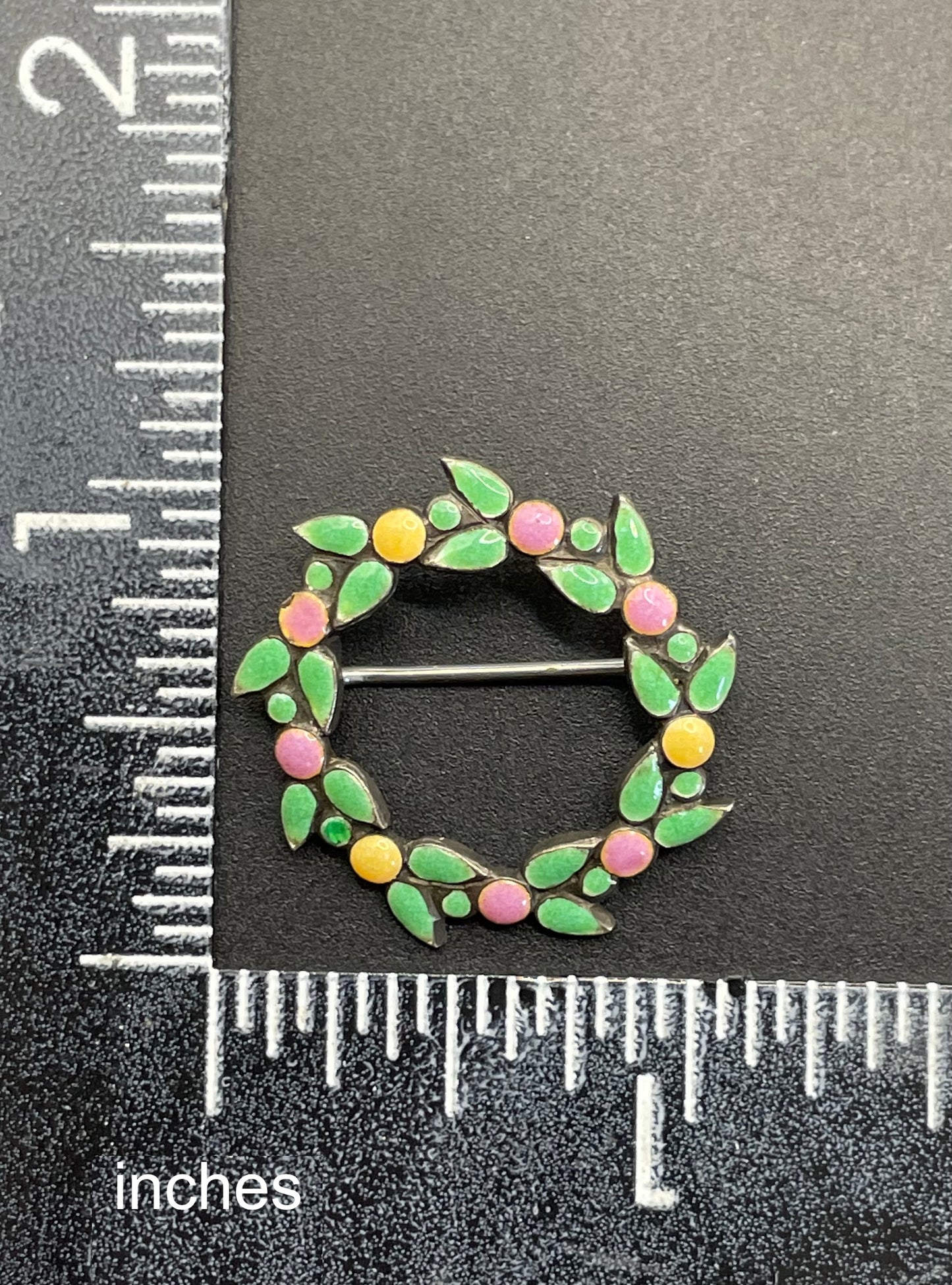
Antique Bernard Instone sterling silver (tested) and hand painted pink, yellow and green enamel Arts and Crafts brooch, petite size
Antique Bernard Instone sterling silver (tested) and hand painted pink, yellow and green enamel Arts and Crafts brooch, petite size
Couldn't load pickup availability
Beautiful Bernard Instone Arts and Crafts antique sterling silver and enamel floral ring brooch. It is a small but beautifully crafted little brooch / pin.
The brooch is beautifully made with pretty enamel green foliate leaf design and yellow and pink flower decoration on the handcrafted sterling silver brooch base..
The brooch is not stamped but tests positive for sterling silver. The technique and design definitely indicates a Bernard Instone piece. It has a diameter of a touch more than 1 inch and fastens with an antique 'C' hook clasp and pin. It is in good vintage condition.
The Victoria & Albert museum in London has one of the most comprehensive jewellery collections in the world, and amongst these displays are multiple pieces created by renowned jeweller from Birmingham, Bernard Instone.
Instone's usage of more accessible and less expensive materials than other fine jewellery of the time was by design. His belief was not that jewellery should be exclusively the right of the restricted few, but rather that jewellery should be available to everyone. The idea that a person could easily gift or wear one of his creations led him to materials such as enamel, silver, and semi-precious gems. These materials minimised costs and made his pieces more economical to those not graced with millions of pounds. The result was beautiful and well-made yet accessible gems that are just as wearable now as they were when first fabricated.
Instone’s pieces have a delicate and often naturalistic appearance, an influence of the Arts and Crafts movement. He is now remembered as a key figure in the second wave of Arts and Crafts metalworkers and designers. His stylistic pieces have less flourish than Art Nouveau and the edges are too soft for the hard geometry of Art Deco. This influence was born of his placement in world history, within the niche of the later 19th Century and World War I.